
Big is back. From oversized art in living rooms to bold storefront windows, large posters are doing the kind of visual heavy lifting that a handful of small prints never could.
But “large poster printing” covers a lot of ground — different sizes, materials, and print methods, all with different price tags and durability. Here’s what actually matters before you hit order.
Why Large Posters Are Having a Moment
Big posters are showing up everywhere lately whether it is restaurant walls, retail windows, home offices, event backdrops, or hallways that used to hold a gallery of small frames. Something’s shifted.
Part of it is Instagram and Pinterest-driven interior design. Oversized art has become shorthand for a space that feels intentional rather than thrown together. A single striking piece does more visual storytelling than a wall of mismatched frames ever could. Part of it is practical: businesses have realized a single large format poster does more work, and costs less in labor and materials than printing, framing, and hanging five smaller ones.
There’s also psychology to it. A large poster commands a room the second you walk in. It doesn’t compete for attention; it just gets it. That’s exactly why retailers use them in windows to stop foot traffic, why event teams build entire backdrops around one design instead of a patchwork of banners, and why restaurants are leaning on a single oversized print to set the mood of a whole room instead of scattering smaller art across the walls.
One bold visual statement grabs attention in a way a cluster of small prints just can’t match. Whether you’re a business owner trying to print out large posters for a launch event, a restaurant owner setting the tone for a dining room, or someone finally sprucing up a living room that’s felt unfinished for years, the appeal is the same: scale creates impact, and impact is what gets remembered.
What Is the Best Size for a Large Poster?
This is the question most people start with, and the honest answer is: it depends on where it’s going.
- For retail windows and storefronts, 24″ x 36″ or 36″ x 48″ tends to hit the sweet spot. They are big enough to stop foot traffic, but not so big to overwhelm the glass.
- For trade shows and event backdrops, you’re usually looking at 48″ x 72″ or larger. Sometimes scaling into banner territory depending on booth size.
- For home or office wall art, 24″ x 36″ is a popular standard, but oversized statement pieces in the 40″ x 60″ range have become a real trend for accent walls.
If you’re wondering what the largest poster size you can print is, most large format poster printing services can go well beyond standard dimensions. Some presses handle rolls wide enough to produce posters 60 inches or more on one side, with length limited mainly by the material roll itself. So realistically, if you can dream it, there’s a printer that can produce custom large posters.
A good rule of thumb: measure your actual space, then size the poster to fill roughly 60-75% of the available wall or window area. Anything smaller reads as an afterthought. Anything larger can feel cramped.
Poster Printing Materials: What Actually Holds Up
This is where most people get stuck, because “poster” can mean five different things depending on the material. Here’s a rundown of the most common poster printing materials and where each one shines.
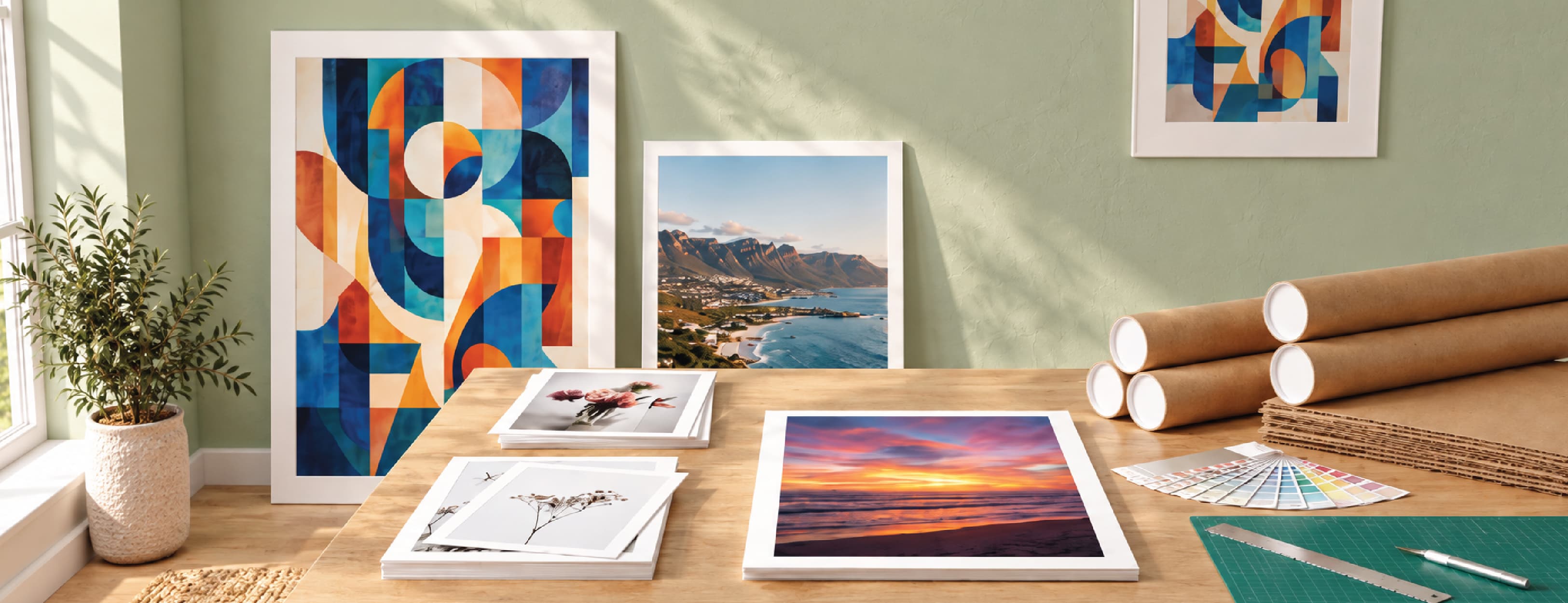
- Standard poster paper is the classic option — affordable, lightweight, and great for short-term use like promotions or event signage that’ll be swapped out soon. If you’re after budget-friendly large posters that don’t need to last forever, this is your starting point.
- Economy posters fall into the above category, offering a low-cost way to print large without a big commitment.
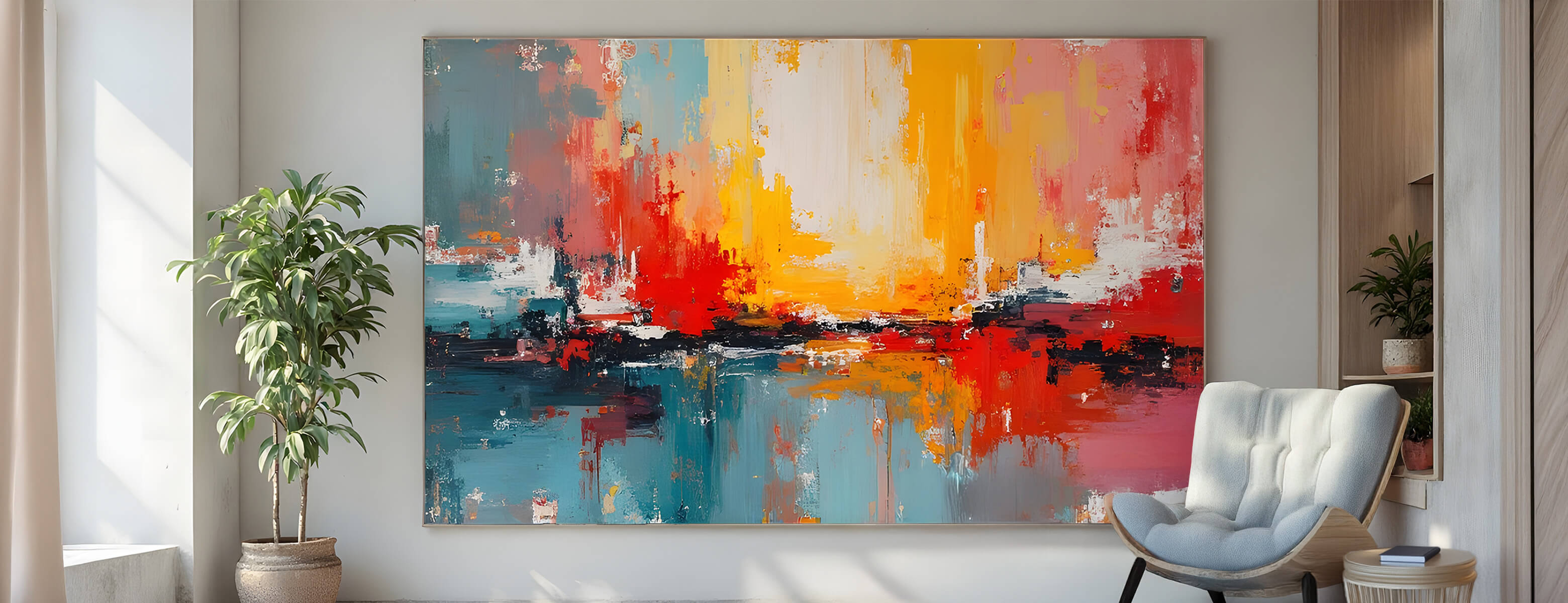
- Canvas brings texture and a gallery feel. It’s the go-to for anyone treating their large poster more like wall art than signage. Canvas Prints hold color well and have a timeless look that fits almost any room.
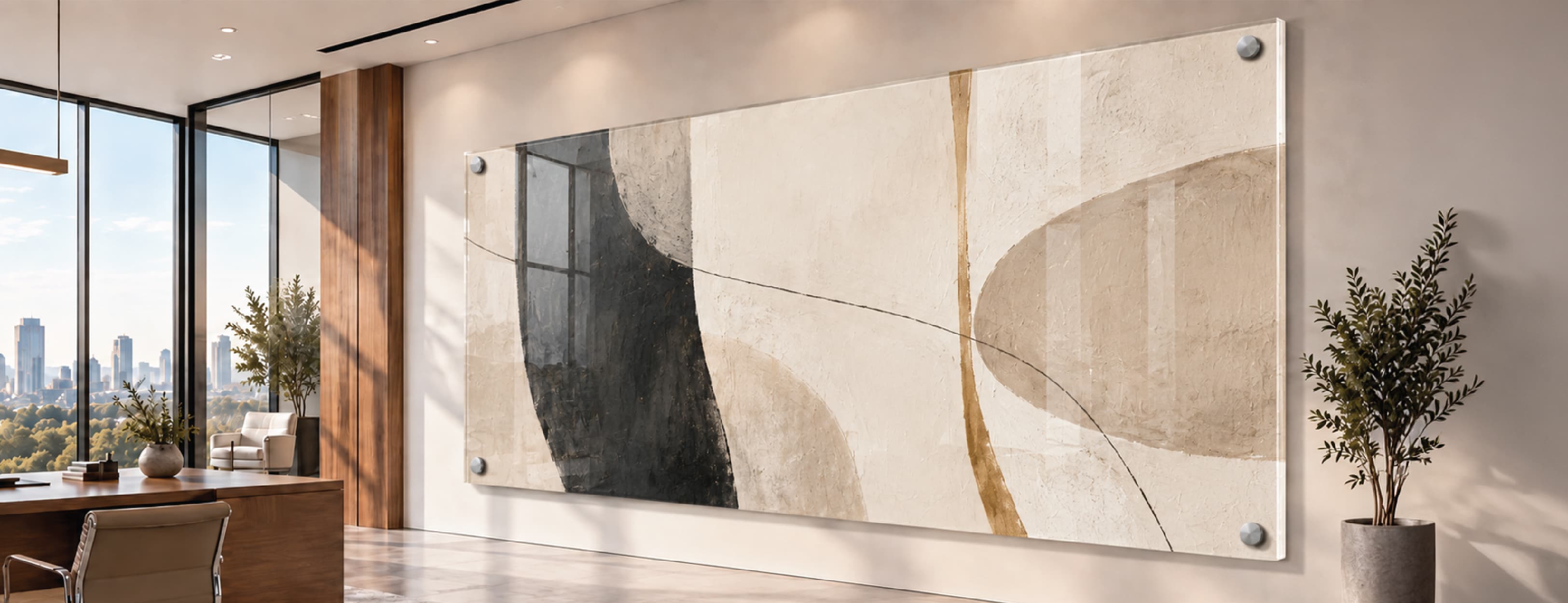
- Acrylic is the premium option. It has depth, a glossy finish, and a modern edge that makes colors look genuinely vibrant. Acrylic prints are popular for offices, portfolios, and anywhere you want a poster to look more like a piece of art than a printed sign.
- Metal prints offer a sleek, industrial finish that works particularly well for photography, branding pieces, or anywhere durability and a modern look matter. They resist warping and hold up well over time, indoors or in covered outdoor spots.
- Backlit film is built specifically for illuminated signage. Think light boxes in retail spaces or airports. If your poster needs to glow, this is the only material built for the job.
- Floats & Wraps give posters a finished, frameless look, either “floating” slightly off the wall or wrapped around the edges of a panel for a clean, contemporary presentation without needing a separate frame.
So, what is the best material for large posters? For short-term promotional use, standard paper or economy posters make sense. For anything meant to last, wall art, branding, office displays like canvas, acrylic, or metal prints are worth the extra cost.
How to Print a Large Poster
- Start with a high-resolution file. Large format poster printing stretches your image significantly, so low-res files will look blurry or pixelated at scale. Aim for at least 150-300 DPI at the final print size.
- Pick your material based on use case. Indoor decor, outdoor signage, and illuminated displays all call for different materials.
- Decide on finishing. Do you want it framed, mounted, laminated, or presented as a float or wrap? This changes both the look and the price.
- Get proof before the full print run, especially for large custom posters where a color or sizing mistake is expensive to redo.
- Choose a printer that specializes in large formats. Not every print shop has presses built for oversized jobs. You want a large poster printing service with the right equipment and material options in-house.
Where to Get Large Format Posters Printed
This is really the deciding factor. Home printers and standard office print shops simply aren’t built for this. You need large poster printing services with commercial-grade large format printers, a solid material lineup, and experience handling everything from Poster Printing basics to specialty formats like backlit film and acrylic prints.
What Does Large Poster Printing Cost?
Large poster printing costs varies based on size, material, and finishing. As a general range:
- Standard paper posters: budget-friendly, often the most economical per square foot
- Canvas: mid-range, priced higher for the material and stretching/mounting process
- Acrylic and metal prints: premium pricing, reflecting the material cost and finish quality
- Backlit film: priced based on size and typically used for commercial installations
Getting a quote based on your exact size and material choice is the best way to nail down real numbers, since large format pricing shifts a lot depending on specs.
The Bottom Line
Large poster printing isn’t complicated once you break it into three questions: what size fits the space, what material fits the purpose, and who has the equipment to print it right. Get those three answered, and you’ll end up with a poster that actually does its job whether that’s stopping foot traffic, finishing a room, or making a brand look as big as it deserves to.


No Comments