
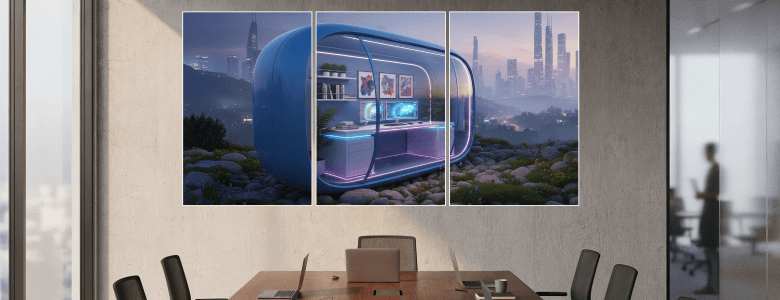
Art and digital innovation are engaging in a quiet dialogue about significance. The question is not only whether an algorithm can make something beautiful. It is also whether that output deserves a physical presence in the spaces we inhabit. Many buyers are grappling with a practical side of this age-old debate. They want to know if a printed image created by lines of code will feel meaningful on a living room wall as a piece made by hand. That concern reaches into taste and provenance, into display and into how a home signals its owner’s values. A thoughtful approach navigates novelty and craft without dismissing either. A thoughtful approach navigates novelty and craft without dismissing either.
AI Art Offers New Forms of Creativity
AI has expanded the palette of ideas available to makers and collectors. It presents combinations that a single human hand might never attempt. Those combinations can spark fresh visual vocabulary and push stylistic boundaries. At the same time, novelty alone is not the same as meaning.
- Many contemporary artists use AI to generate starting points and then refine the output.
- Collectors increasingly value the concept behind a work as much as the finished object.
- AI-generated art prints can act as creative experiments that lead to new series or collaborations.
- Galleries and designers are adopting modern AI art trends to diversify offerings and spark conversation.
Vivyx views this as an opportunity. The company supports artists who use generative tools while ensuring that the final printed object carries weight and craft.
Printing Brings Digital Work into The Physical Domain
Turning a pixel into a print changes the terms of engagement with the artwork. A printed piece invites touch and inspection in a way that a screen does not. The material choices and printing process contribute as much to the final experience as the image itself.
- Selecting the right paper or substrate is essential for accurate color and tonal depth.
- Scale matters; a small image on a large wall can suddenly feel cinematic or oddly empty.
- Digital art printing for walls must account for viewing distance and ambient light.
- Options like custom canvas prints and acrylic prints transform the flat file into an object with presence.
Vivyx recommends viewing a file on high quality proof before committing a large print. Sampling helps to reveal how texture, gloss, and framing alter perception.
Authenticity Is Not a Single Dimensional Question
Questions of authorship and originality are central to the AI art authenticity debate. They do not yield a simple yes or no. Many reasonable positions exist between outright rejection and uncritical acceptance.
- Some purists insist that emotional labor and manual technique anchor true authenticity.
- Other collectors accept collaborative authorship where human curators shape algorithmic output.
- The phrase AI artwork vs human art frames a false binary when many works are hybrid.
- Legal and ethical questions about training data remain unsettled and important to consider.
Vivyx takes a transparent stance. The company encourages documentation that clarifies the role of AI in the creative process while emphasizing the craft of printing and presentation.
Quality And Material Choices Shape Perception
The moment an artwork becomes physical, it acquires new qualities that influence how viewers respond. A careful selection of finishes and formats will often decide whether a piece reads as thoughtful or merely trendy.
- Economy choices such as economy poster prints suit short-term displays and experimental projects.
- For a lasting presence, archival papers and museum grade substrates make a visible difference.
- Larger scale displays can benefit from rigid options or specialty mounting to avoid sagging or curling.
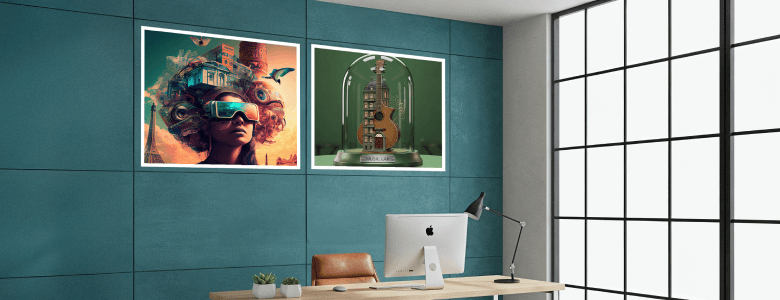
- When audio environments matter, integrating acoustic panels that feature printed images offers a clever functional solution.
Vivyx offers a range of services to match intent with output. These options include everything from entry level posters to gallery standard production and framing.
Presentation And Context Determine Emotional Impact
An image alone tells only part of the story. The way it is framed, lit, and placed alters its meaning. An earnest photograph can be read as private when framed with care. A loud graphic can look rough or refined depending on material and neighbors on the wall.
- Proper framing protects the work and signals respect for the object.
- Controlled lighting reveals texture and avoids glaring on glossy finishes.
- Grouping works into a coherent arrangement changes how each piece reads.
- Introducing pieces printed on different substrates, such as fabric or metal, creates contrast and depth.
Vivyx works with clients on display strategy. The team can advise on pairing prints with furnishings and on the best ways to integrate new pieces into existing collections.
Practical Considerations for Buyers and Collectors
Many potential buyers begin with a single practical question: should I print AI artwork for my home or office. That inquiry leads to further concerns about rights, reproducibility, and long-term value. Solid answers come from clarity about provenance and intent.
- Confirm that the creator has the right to reproduce and sell the image.
- Ask whether the file is a unique edition or part of an open edition with many copies.
- Consider custom finishing options such as lamination or float mounting for durability.
- When ordering multiple locations, bulk printing services can reduce costs without sacrificing quality.
For people who want a tailored object, custom art prints offered by reputable painters let a buyer control size, paper, and edition. Vivyx helps secure clear usage terms and offers flexible production runs.
When AI Art Makes Sense in a Home
Some spaces benefit from the playful unpredictability of AI generated images. Other settings require a calmer or more personal touch. Matching the artwork to the room and to the rhythms of daily life is an overlooked but crucial step.
- Bright and eclectic rooms welcome experimental imagery and bold palettes.
- Minimal spaces often call for restraint and well considered editing.
- Public or high traffic areas may favor durable formats such as vinyl banners or rigid panels.
- For temporary events or promotions, paper banner printing is both economical and fast.
Vivyx blends design consultation with production expertise. This combination helps clients select pieces that feel intentional rather than impulsive.
The Collector Mindset and Future Proofing
Collectors who plan to hold works long term should think about documentation and conservation. The provenance of an artwork is a narrative asset. Clear records matter to future owners and to the historical conversation about the role of machine assistance in creativity.
- Maintain provenance files that list the creator, date, tools used, and edition size.
- Store high resolution masters in secure formats to allow future reprints at high fidelity.
- Choose materials that resist fading and that are compatible with conservation practices.
- Consider framing solutions that allow safe transport and easy inspection.
Vivyx provides archival grade options and stores master files securely when clients request that service. That care positions digital works for future appreciation.
Conclusion
Printing AI art is rarely a matter of simple aesthetics. It is a decision that crosses craft and context, rights and resonances. Novelty will draw attention, but only quality and thoughtfulness will sustain it on the wall. For homeowners and collectors who are curious, the sensible path is to pair bold experimentation with rigorous production standards. Vivyx stands ready to translate digital experiments into objects that respect artistic intent and the realities of display. If the work has a story and the print honors that story, the result can feel no less authentic than any other piece on a wall. In that convergence of idea and object, the debate becomes less about who made the image and more about why it belongs where it hangs.




No Comments