
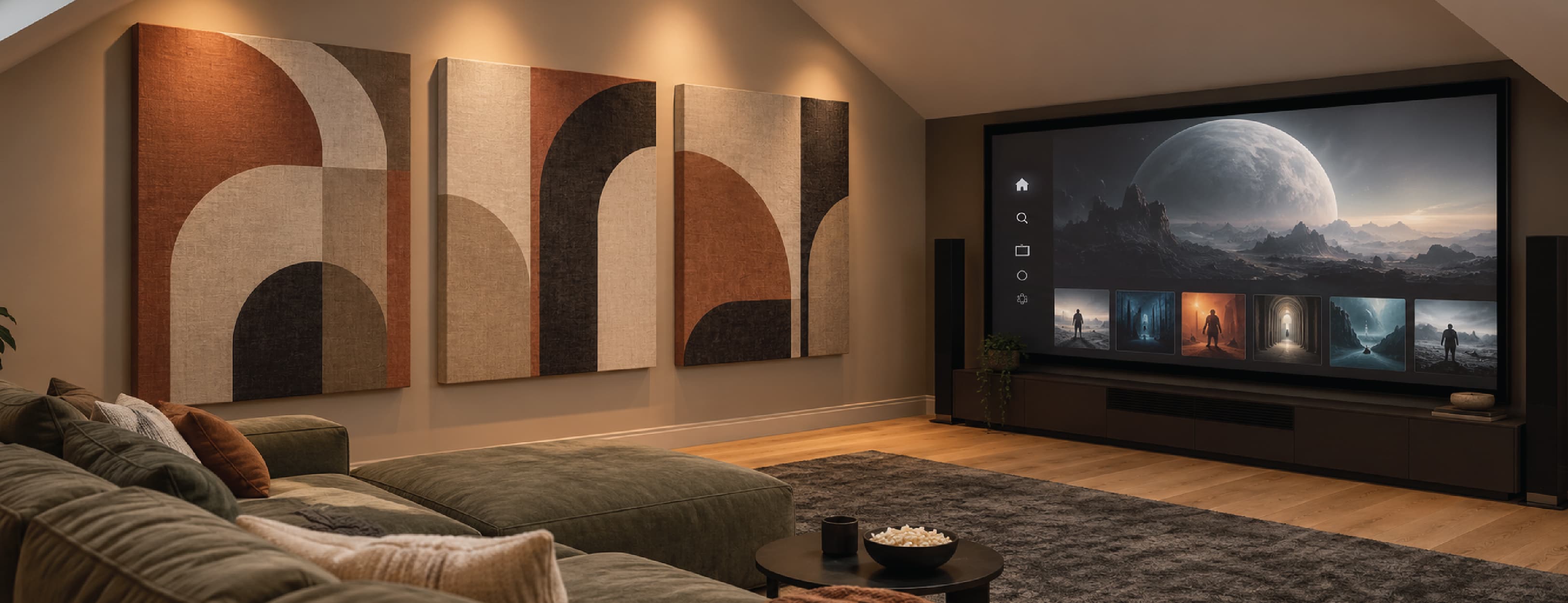
You have invested in a great screen, a capable receiver, and speakers that cost more than you would like to admit. Then you press play, and the dialogue sounds muddy while explosions blur into a wall of noise. The equipment is rarely the problem. The room usually is.
Bare walls, hard floors, and large windows bounce sound around until it loses clarity. That is why home theatre acoustic treatment matters, and why the debate over decorative acoustic panels vs foam comes up so often. Both products absorb sound, but they differ in performance, durability, and appearance. This guide will help you decide which one suits your space.
What Is the Difference Between Acoustic Panels and Acoustic Foam?
The short answer is that acoustic panels use dense, fabric-wrapped materials such as mineral wool or high-density fiberglass, while acoustic foam is a lightweight, open-cell polyurethane product, usually cut into wedges or pyramids.
That difference in material shapes everything else. Dense cores absorb a wide range of frequencies, including the low and mid tones that carry most of the voices and music in a film. Foam, being thin and light, mainly absorbs high frequencies. It can tame harshness, but it does little for the warmth and body of a soundtrack.
How Each One Works
Sound is energy, and absorption converts that energy into a tiny amount of heat as the sound waves pass through porous material. Thicker, denser material catches longer wavelengths, which is why a four-inch panel outperforms a one-inch foam tile in nearly every test.
When comparing acoustic panels vs acoustic foam, thickness and density matter far more than the shape on the surface. Those wedges look technical, but their shape adds little compared with extra depth.
Do Acoustic Foam Panels Improve Movie Sound Quality?
They can, within limits. Acoustic foam panels for home theatre use are common because they are cheap, easy to cut, and simple to stick up. If your room has sharp echoes or a ringing, hollow sound when you clap, foam will reduce some of that high-frequency bounce.
The trouble starts when foam is asked to do more. Because it absorbs treble but leaves bass and midrange untouched, a room covered entirely in foam often sounds dull and unbalanced. Voices lose richness, and the overall sound feels strangely flat.
Where Foam Falls Short
Foams also have practical drawbacks. It tends to crumble, fade, and collect dust over several years. Its appearance is another concern, since most people do not want a wall that resembles a recording booth in their living space.
None of this makes foam useless. It works as a low-cost starting point or as a supplement in a small room. Treat it as a first step rather than a complete solution.
Are Decorative Acoustic Panels Effective in Home Theatres?
Yes, and often more effective than foam. Decorative acoustic panels for home theatre use combine a dense absorbing core with a stretched fabric face that can carry any image you choose. You get genuine sound control without sacrificing the look of the room.
Quality decorative acoustic panels absorb across a much broader frequency range, which keeps dialogue clear and gives music and effects a natural balance. They also last longer, resist crumbling, and keep their appearance for years.
The Appeal of Printed Options
Printed acoustic panels take this idea further. A high-resolution image, whether a movie poster, a landscape, or abstract artwork, can be printed directly onto the acoustically transparent fabric. The sound passes through the print and into the core, so the image does not weaken performance.
For a theatre that doubles as a family room, this approach solves two problems at once. The wall looks finished, and the sound improves. Many homeowners already use decorative wall prints or custom canvas prints to personalize a space, and a printed panel simply adds a functional layer to that same idea. Some people pair panels with metal wall prints elsewhere in the room, which gives the design depth and contrast.
Comparing the Two Side by Side
A direct comparison makes the trade-offs easier to see.
- Sound Performance
Sound absorbing wall panels with a dense core handle bass, midrange, and treble. Foam handles most treble. If you care about hearing every line of dialogue clearly, panels have a clear advantage.
- Appearance and Durability
Foam typically comes in dark gray or black and shows its age quickly. Panels can match your decor, and decorative soundproofing panels often become a feature of the room rather than something to hide. One note of caution applies here. Absorption and soundproofing are not the same thing. Panels improve how a room sounds inside, while true soundproofing requires mass and construction changes to block noise from leaving. Marketing sometimes blurs the two, so read product descriptions carefully.
- Cost
Foam costs less upfront. Panels cost more, but they last longer and perform better, which makes the price difference smaller over time. If your budget is tight, you can start with a few well-placed panels rather than covering a whole wall in foam.
Where Should Acoustic Panels Be Placed in a Home Cinema?
Placement matters as much as the product itself. A few well-chosen spots will do more than a room filled at random.
Start With the First Reflection Points
Sit in your main seat and ask a helper to slide a mirror along the side walls. Wherever you can see a speaker in the mirror, sound will bounce directly to your ears. Those spots are your first reflection points, and they deserve panels first.
Treat the Back Wall and Corners
The wall behind your seating reflects sound straight back toward the screen, which creates echo and smears detail. Panels here make a noticeable difference. Corners tend to collect bass, so thicker panels or dedicated bass traps work well there.
Do Not Forget the Ceiling
A ceiling cloud above the seating area controls reflections that many people overlook. In rooms with hard floors, this step often brings the biggest improvement after the side walls.
A good target is to cover roughly 20 to 30 percent of the wall surface. Going further rarely helps and can leave the room sounding lifeless.
Choosing the Best Acoustic Panels for Home Cinema
When shopping for the best acoustic panels for home cinema use, focus on a few practical points.
- Core material: Look for mineral wool or high-density fiberglass rather than thin foam.
- Thickness: Two inches works for general control, while four inches handles lower frequencies more effectively.
- Fabric face: Choose an acoustically transparent fabric so that printing or color does not block sound.
- Fire rating: Check that the materials meet safety standards for residential use.
- Design: Pick imagery that suits the room, since you will see it every time you watch a film.
Reputable sellers publish absorption data, often listed as an NRC rating. A higher number means better overall absorption, so use it to compare products honestly.
Which One Should You Choose?
For most homes, decorative panels are the better long-term choice. They deliver fuller, more balanced sound and look like part of the room rather than an afterthought. Foam still has a place if you need a quick, budget-friendly fix or if you are testing how much treatment your room needs.
A practical middle path is to begin with panels at the first reflection points and the back wall, then evaluate the result. Many people find that a modest amount of quality treatment gives them most of the benefit.
Final Thoughts
Great home theatre acoustic treatment does not require turning your space into a studio. It requires understanding how sound behaves and choosing materials that match your needs. Foam offers an affordable entry point, but panels deliver the clarity, durability, and style that make a theatre feel complete.
If you want better sound without compromising your decor, explore decorative acoustic panels that fit your room and your taste. Your next movie night will sound sharper, and your walls will look better too.





No Comments