
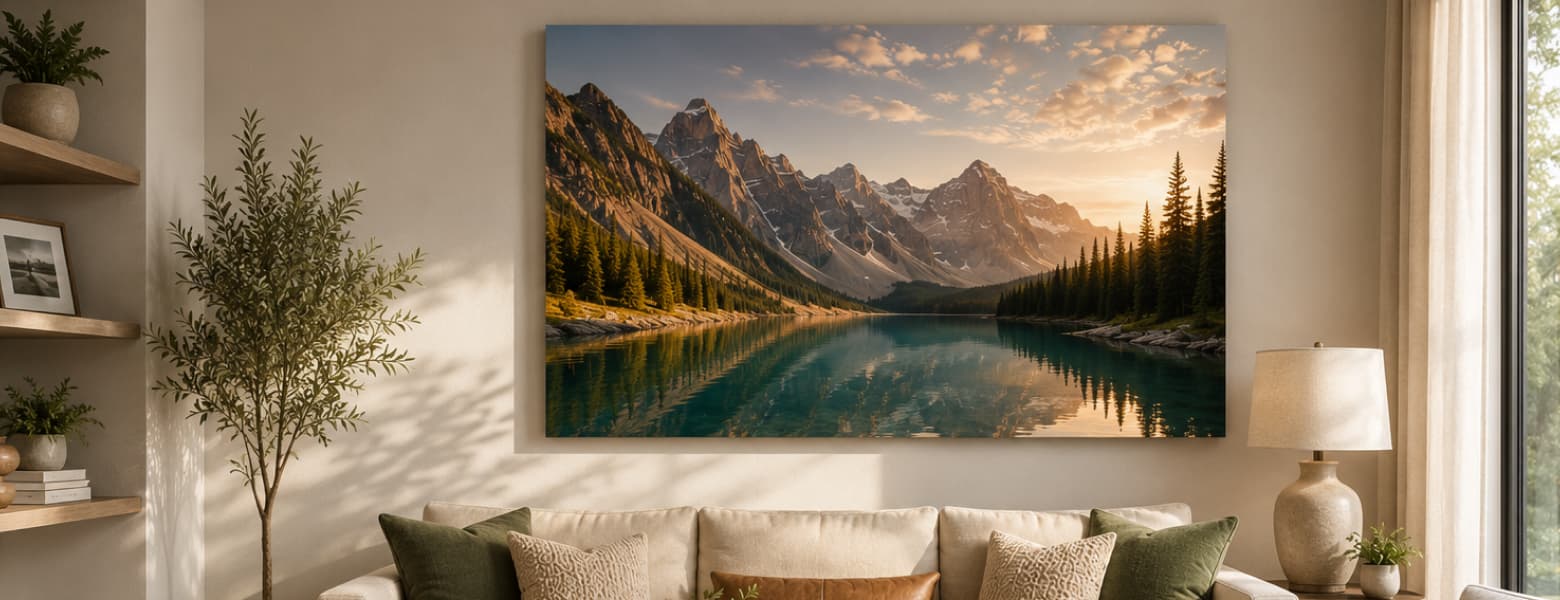
Your living room does a lot of talking on your behalf. It’s where guests end up, where the family actually spends time, and where the little details, a photo, a piece of art, a color choice, end up shaping how the whole home feels.
Canvas wall art is one of the easiest ways to make that space feel finished. But almost everyone gets stuck on the same question before they order: what size should it actually be?
It’s a fair thing to get stuck on. A canvas print that’s too small gets swallowed by the wall around it. One that’s too big can throw off the whole room. The right living room canvas size comes down to a handful of practical factors, your wall, your furniture, how far you’ll be standing from it, and this canvas print size guide walks through all of it, so you’re not guessing.
Why Size Makes a Difference
It’s tempting to pick a size based purely on the image, but proportion does more work than people expect. A well-sized canvas print creates balance between your furniture and your wall, so the piece feels like it belongs there instead of looking added at the last minute. That’s true whether you’re working with a small apartment living room or a big open-concept space.
If you’re going the custom canvas prints route with a favorite photo or a piece of original art, this matters even more, since you’re not just picking from a rack, you’re deciding the exact dimensions yourself.
How Big Should a Canvas Be for a Living Room Wall?
A decent rule of thumb: let your art fill somewhere between 60% and 75% of the width of the furniture below it.
So, if you’ve got a 72-inch sofa, you’re looking for artwork in the 43 to 54-inch range. Leave 6 to 10 inches of breathing space between the top of the sofa and the bottom of the canvas. And center it with the furniture, not the wall; those two things rarely line up perfectly, and furniture should win.
How to Measure a Wall for Canvas Art
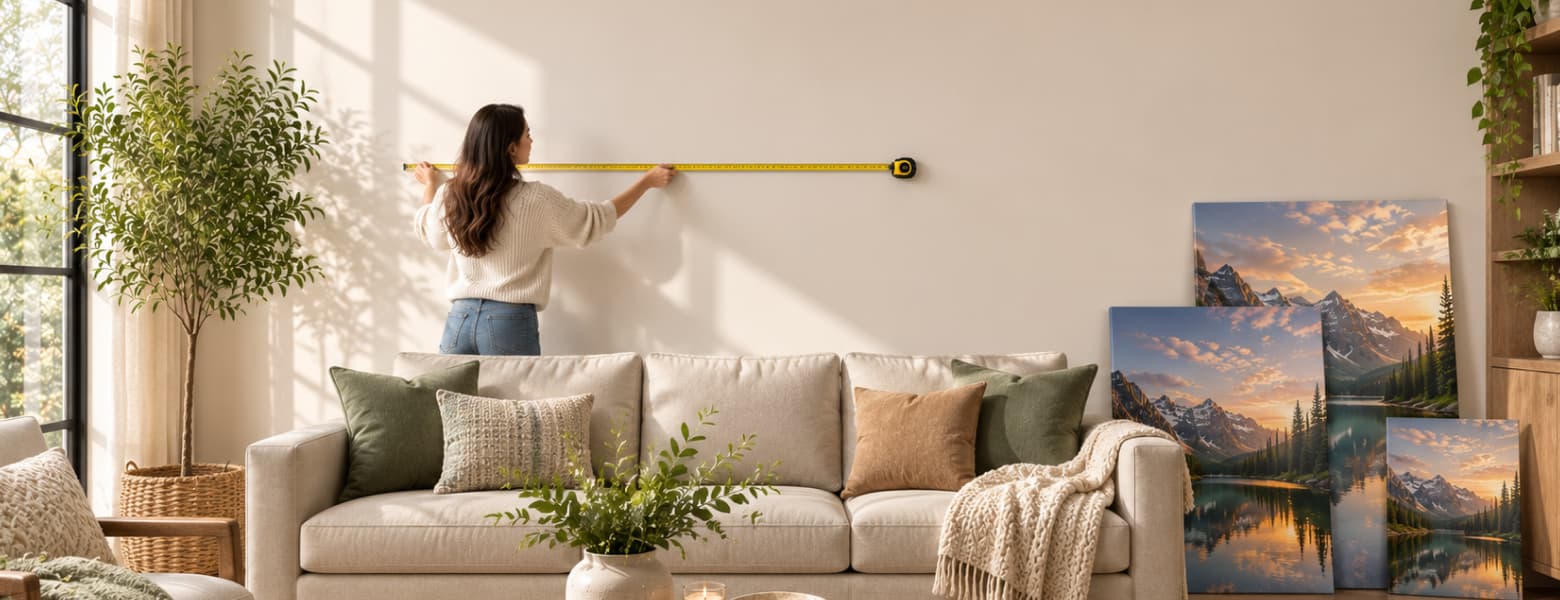
Even the most beautiful artwork can look out of place if it’s the wrong size. Although this step is quick, it’s often overlooked, leading to common sizing mistakes.
First, measure the actual open wall space, not including windows, shelves, or a fireplace mantel eating into it. Then measure the furniture you’re hanging above, since that’s your real reference point, not the wall itself. Finally, give the piece some breathing room. Art crammed right up against the edges of a wall or jammed next to a doorway never looks intentional.
Standard Canvas Print Sizes
If you want a quick reference, here’s a general canvas size chart:
| Canvas Size | Best For |
| 8×10 to 11×14 inches | shelves, small accents, gallery wall filler |
| 16×20 to 18×24 inches | small living rooms, apartments, hallways |
| 20×30 to 24×36 inches | Medium living rooms, above consoles, smaller sofa |
| 30×40 inches | large living room walls |
| 36×48 to 40×60 inches | Feature walls, oversized living rooms, vaulted ceilings, open-concept spaces |
These standard canvas print dimensions cover most homes, but if your wall or your photo doesn’t fit neatly into one of these, custom canvas prints solve that without much extra hassle.
If you’re decorating on a budget, economy posters can be a practical option for temporary displays or seasonal wall décor.
Large vs Small Canvas Prints: Which Fits Your Room?
Neither is “better,” it depends on the room and the look you’re going for.
Large canvas prints work well in open floor plans, rooms with high ceilings, and more modern interiors. One big piece reads as a single, strong focal point, looks clean, and only needs one hanging point.
Smaller canvas prints make more sense in apartments, reading nooks, or traditional rooms where a gallery wall feels more at home. You get more flexibility to rearrange later, and it’s an easier way to display several photo canvas prints without one image dominating the space.
Oversized Canvas Prints for a Statement Wall
If your style leans minimalist, oversized canvas prints are often the better move over a cluster of smaller frames.
One large piece above a sectional, a fireplace, or an entertainment unit gives you that gallery-quality look without the clutter of matting, multiple frames, or uneven spacing to manage.
How Many Canvas Prints Should You Hang?
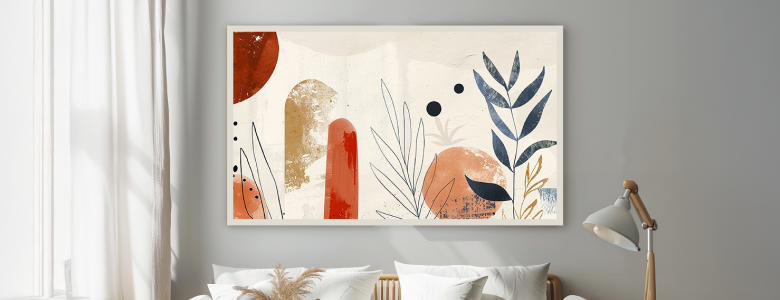
There’s no single right answer here; it comes down to preference. One large canvas suits modern or minimalist rooms and works especially well for a family portrait or a landscape shot.
Two matching canvases look good in symmetrical rooms, flanking a large sofa or a pair of accent chairs. Three-panel sets are a natural fit for panoramic shots, skylines, or nature scenes.
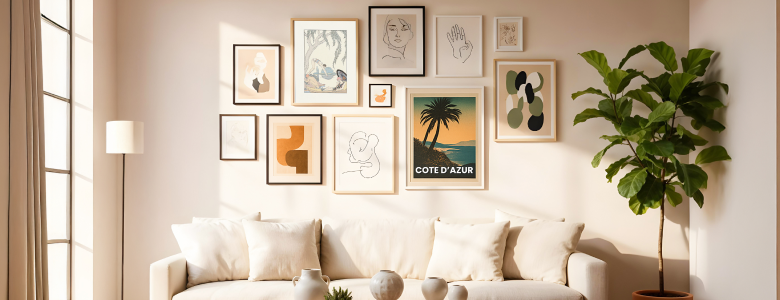
And if you want something that feels more personal and collected, a gallery wall mixing a few different photo canvas prints in varying sizes does that well.
Framed or Gallery-Wrapped?
The finish changes the feel as much as the size does. Framed canvas prints have a more polished, traditional look, and tend to suit formal living rooms or black-and-white photography especially well.
Gallery-wrapped canvas, where the image continues around the sides with no external frame, reads as cleaner and more contemporary, and pairs naturally with modern living room wall art.
You can browse both finishes for that seamless, no-frame presentation. Many homeowners also choose between floats & wraps depending on whether they prefer the look of a floating frame or a clean gallery-wrapped edge.
When Custom Sizing Makes More Sense
Not every wall or every photo fits a standard size, and that’s fine. Custom canvas prints let you match an unusual wall dimension, build a panoramic piece, or size a family photo to fit exactly where you want it, without settling for “close enough.”
If you’re building a full gallery wall, custom wall art also makes it easier to keep everything proportional to each other instead of working around whatever sizes happen to be in stock.
For a more contemporary finish, some homeowners also consider Acrylic Prints, especially in modern living spaces with minimalist décor.
A Few Practical Sizing Tips
Let your artwork cover roughly two-thirds of the furniture beneath it. Hang the center around eye level, about 57 to 60 inches from the floor. If you’re doing multiple panels, keep the spacing between them consistent, uneven gaps are more noticeable than people expect.
Measure the actual open wall space first, not including windows, shelves, or a mantel eating into it, then measure the furniture you’re hanging above, since that’s your real reference point. And measure twice — it’s the cheapest step in the whole process and the one most people skip.
Don’t Forget About Light
Size gets all the attention, but where your canvas sits relative to a window matters almost as much. Hang it directly across from a window and you’ll get glare washing out the details during the day.
Hang it somewhere with no light source nearby, and it just goes flat and forgettable at night. Perpendicular to the main window is usually the sweet spot, and for interior walls, a picture light or some nearby accent lighting goes a long way.
Rounding Out the Room
Canvas prints rarely need to do all the work alone. Floating shelves, a plant or two, some accent lighting, or a well-placed mirror all add texture around the piece without competing with it.
The goal is for the canvas art to be the centerpiece while everything else quietly supports . it.
Finding Your Fit
Getting the size right isn’t complicated; it just takes a tape measure and a little patience.
Start with your wall, work backward from your furniture, and don’t be afraid to size up if the room calls for it.
The same sizing principles can also help when planning poster printing, ensuring your wall art looks proportionate regardless of the material you choose


No Comments